Life Sciences & Health
The Interdisciplinary Research Area Life Sciences and Health (LSH) interfaces Machine Learning (ML), explainable Artificial Intelligence (XAI), and data science with the life sciences including drug discovery, medical research, and healthcare.
The concept of Triangular AI forms a foundation of LSH. Artificial Intelligence is applied to heterogeneous life science and medical Data, which provide different scientific Contexts, and utilize Knowledge from various domains to bridge between predictive modeling and experimental design.

AI in the Life Sciences and Drug Discovery
A nucleus of LSH is the Department of Life Science Informatics (LSI) at the b-it with a strong track record in developing computational methods for pharmaceutical research, data analytics, and drug discovery applications. Methodological focal points include methods to identify new active compounds in virtual databases, chemical language models for generative design of highly potent compounds with desired biological activity, and chemically intuitive concepts for rationalizing predictions of Machine Learning models. Practical drug discovery efforts currently concentrate on the development of new inhibitors of understudied human protein kinases for cancer treatment and immunology.
AI in Medicine and Healthcare
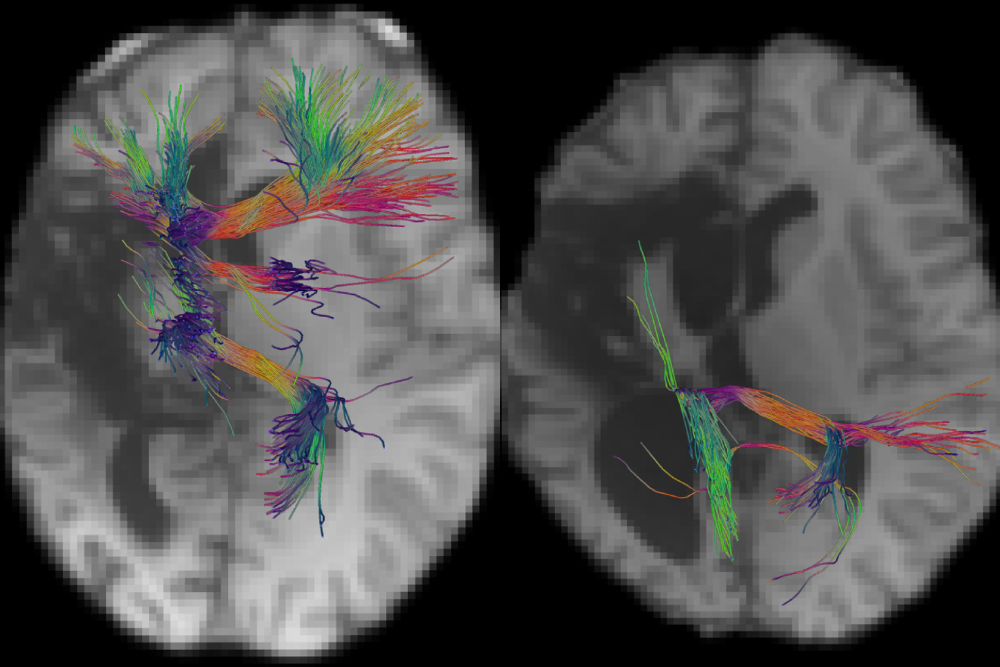
AI in medicine demands models that are trustworthy, explainable, and privacy-preserving. At Lamarr, we develop theoretically grounded methods that integrate causality for counterfactual reasoning and explainability, including in foundation models. Together with clinical partners, we design federated and decentralized approaches enabling secure multi-center learning on sensitive health data. Our goal is to translate cutting-edge AI into reliable tools that directly improve patient care through early detection and robust decision support.
Explainable AI in Interdisciplinary Research
The impact of AI in the interdisciplinary research environments life sciences, drug discovery, and medicine largely depends on the use of computational results for experimental design and practical applications. Pooling expertise across research areas, the Lamarr Institute advances XAI in Life Sciences and Health to rationalize predictions and translate them into experimentally testable hypotheses for causal reasoning. Lamarr researchers hereby develop AI models that are transparent and understandable to an interdisciplinary audience.
Contact persons


Strategic Collaborations
The Lamarr Institute collaborates with leading interdisciplinary and domain partners in the area of Life Sciences and Health. Partners include:
IKIM
The Institute for Artificial Intelligence in Medicine unites experts from University Hospitals Essen and Duisburg Essen.
read more
UKB
The University Hospital Bonn connects patient care with research and teaching at the University of Bonn’s Faculty of Medicine.
read more
TüCAD2
The Tübingen Center for Academic Drug Discovery brings together early drug discovery approaches.
read more
NAIST
The Nara Institute for Science and Technology’s research spans information, biology and materials science.
read more
BRIDGE
The student exchange initiative between Boston and the Ruhr area focuses on Biomedical Physics and Computer Science.
read morePIs in Life Sciences and Health
Scientists at the Lamarr Institute engage in intensive exchange across research areas and disciplines. The following scientists are Principal Investigators in the field of LSH, some of whom also conduct research in other areas.



Jun. Prof. Dr. Florian J. Boge
Associated Principal Investigator Life Sciences & Health to the profile



Prof. Dr. Tatiana von Landesberger
Associated Principal Investigator Human-centered AI Systems to the profile




Publications
News from the Area Life Sciences & Health