How AI Can Improve Medical Decisions
Better medical decisions can improve quality of life—provided that doctors understand which factors actually influence diseases. This is exactly where modern AI research comes in: it helps identify genuine cause-and-effect relationships from large amounts of medical data. An exhibit by the Lamarr Institute for Machine Learning and Artificial Intelligence, led by Lamarr Principal Investigator Prof. Dr. Michael Kamp in collaboration with the Institute for Artificial Intelligence in Medicine (IKIM) at Essen University Hospital, will demonstrate how such methods work at MS Wissenschaft 2026.
The exhibition ship will set sail again in May 2026. As the organizers announced today, the interactive exhibition will visit around 35 cities in Germany, Poland, and Austria during the “Medicine of the Future” Science Year, bringing current medical research to life for the public.
A Digital Twin as Research Model
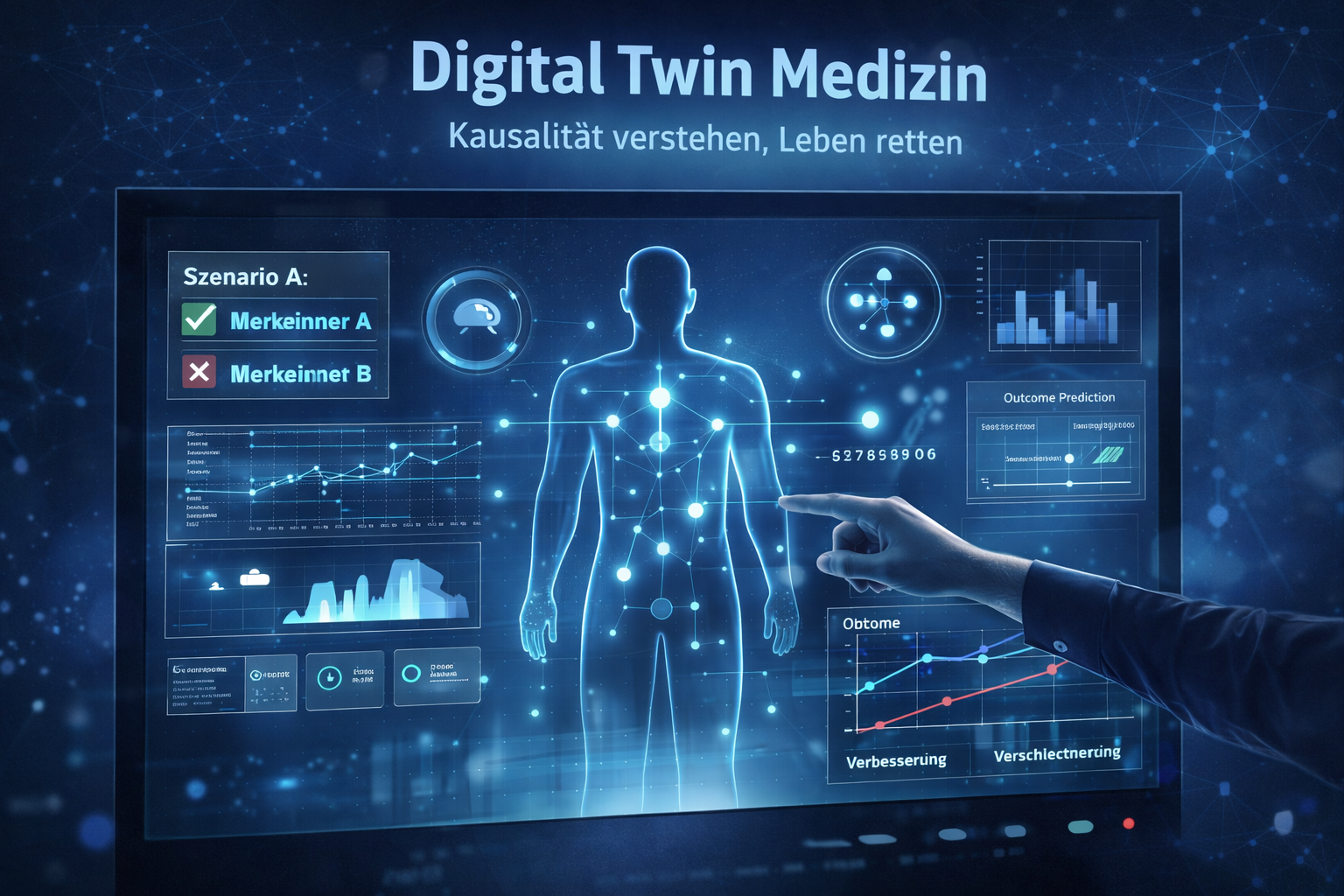
The interactive exhibit, tentatively titled “Digital Twin Medicine: Understanding Causality, Saving Lives,” brings key principles of modern data-driven medicine to life. Visitors work with a patient’s digital twin and can test medical hypotheses and make treatment decisions themselves.
Using a semi-transparent touchscreen, they analyze patient data, test different treatment options, and observe how these decisions affect the virtual patient’s health. The simulation demonstrates which relationships are actually causal—and which are merely coincidental correlations. This makes it clear why medical decisions are often complex—and how methods from modern AI research can help us better understand this complexity.
Why Causality Is Crucial in Medicine
Many AI systems identify patterns in data. However, this is often insufficient for medical decision-making. It is crucial to understand which factors actually cause an effect. This is where research approaches such as causal modeling and counterfactual reasoning come into play. They allow us not only to analyze statistical correlations but also to specifically investigate how alternative medical decisions might affect the course of a disease—for example, by simulating which treatment is likely to yield the greatest therapeutic effect under comparable conditions.
In the long term, such methods open up new possibilities for more personalized medicine. Therapies can be selected more precisely, risks can be better assessed, and treatments can be tailored more specifically to individual patients, with the potential to improve treatment outcomes and enhance quality of life.
Communicating Research in an Accessible Way
Every year, the MS Wissenschaft brings the latest research directly to a broad audience. On board, visitors can conduct their own experiments at around 30 interactive stations and gain insights into new scientific methods. For the Lamarr Institute, participating in this event is part of its commitment to communicating AI research in a transparent and accessible way, especially in socially relevant fields such as medicine. The exhibit is part of Lamarr’s research focus Life Sciences & Health, which concentrates on data-driven methods for medical diagnostics, treatment, and health research. The joint station run by Lamarr and IKIM serves as an example of how methods from machine learning and medical research work together to open up new perspectives for diagnosis and treatment.
MS Science 2026
• Tour start: May 7, 2026, in Berlin
• Approximately 35 stops in Germany, Poland, and Austria
• Free admission
• Theme of the Year of Science:
Medicine of the Futuretetur adipiscing elit.