AI: Groundbreaking Innovation or Just Luck?
Artificial Intelligence seems to be everywhere. Many are turning to the technology because they believe in its potential to solve a wide range of modern problems. At the same time, numerous companies claim that their products are AI-based, use AI, or were created with AI. The media, too, contribute to the prominence of the topic in public discourse, sometimes through sensationalist or misinformed reporting.
Others take a far more critical view, seeing risks that range from rising unemployment to a threat to humanity itself. How did we get to this point?
To understand that, it helps to look at where the term “AI” comes from – and what it actually means.
A Short History of AI
Mythical stories aside, the term “artificial intelligence” is generally traced back to the 1956 Dartmouth Summer Research Project on Artificial Intelligence. But important developments had already taken place before then.
The McCulloch-Pitts neuron, introduced by Walter Pitts and Warren McCulloch in 1943, described the concept of an artificial neuron that processes binary information and laid important groundwork for modern neural networks.
In 1950, Alan Turing introduced what later became known as the Turing Test: the idea that a machine might reasonably be considered intelligent if it could conduct a conversation in such a way that a human could not reliably tell whether they were communicating with another person or a machine.
AI attracted considerable attention at the time, leading to the establishment of research institutes and new funding opportunities. But when researchers were unable to meet the high expectations surrounding the technology, public enthusiasm declined sharply in the 1970s. The result was what is now known as the first AI winter, marked in particular by cuts in research funding.
Interest returned in the 1980s, this time largely in the form of so-called “expert systems.” These systems mimic human decision-making through algorithmic if-then rules. Advances in computer hardware made them attractive not only to researchers, but also to industry. Yet their practical applications remained limited, contributing to a second AI winter in the 1990s.
Funding declined once again – but research continued.
During the 2000s and 2010s, machine learning advanced considerably, enabled in large part by new technological capabilities. Models became increasingly sophisticated, particularly in areas such as Convolutional Neural Networks for image processing. Over time, developments in fields including natural language processing and computer vision made applications such as optical character recognition and object detection increasingly powerful.
Much of this foundational work, however, received less public attention than today’s AI systems. That changed dramatically with the rise of large language models and the renewed public interest in generative AI. Since then, AI has become almost impossible to ignore.
But What Exactly Is AI?
There is no universally accepted definition of artificial intelligence. Common descriptions often refer to systems that perform tasks associated with aspects of human intelligence.
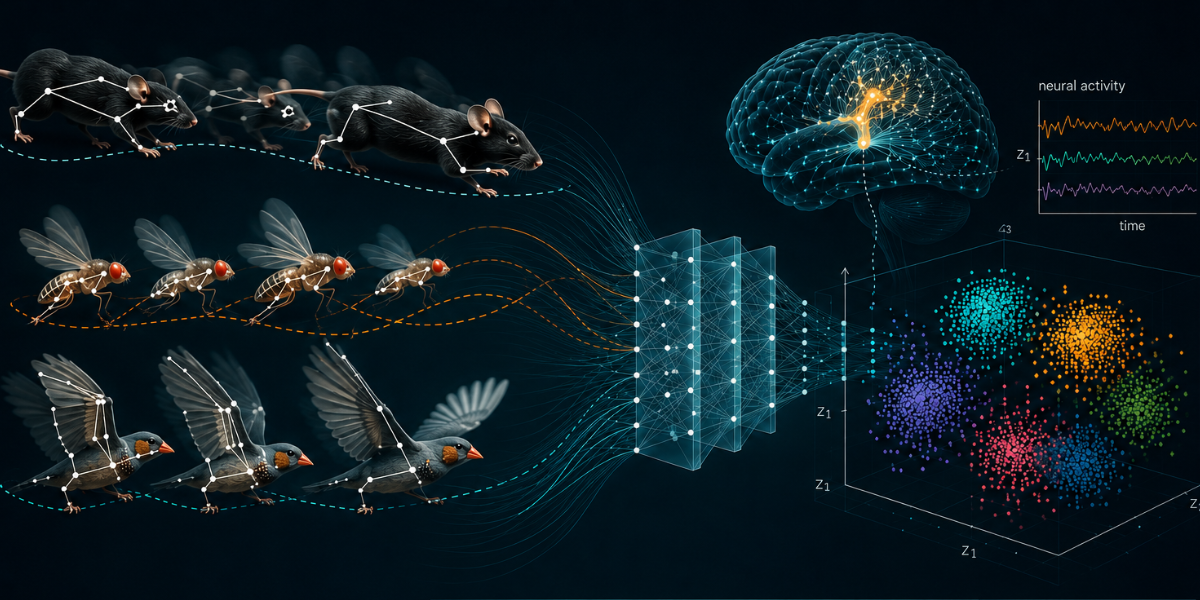
The term itself is therefore broad. It serves as an umbrella for several subfields, one of the most important being Machine Learning (ML). In Machine Learning, a model is trained on data to make predictions or generate content. ML in turn includes approaches such as Deep Learning, which relies on multilayer neural networks.
Neural networks consist of multiple layers that receive and process inputs in predefined ways. In Computer Vision, for example, a convolutional layer can identify relevant features in an image, such as edges or shapes. At the end of the model, an output layer produces a prediction – for example, estimating a person’s age from a photograph.
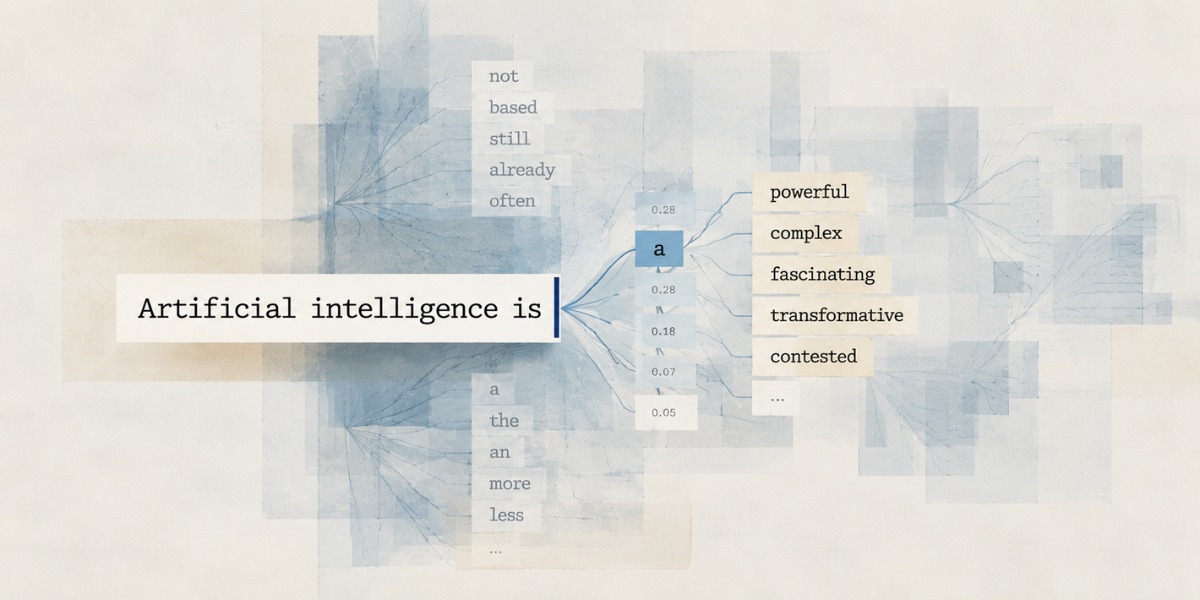
More complex Deep Learning models include transformers, which form the basis of today’s Large Language Models (LLMs) such as GPT, Claude, or Gemini. In simplified terms, an LLM generates text by predicting which token is most likely to follow the preceding ones.
To do this, such models must be trained on enormous amounts of data. While the overall structure of the model is defined by its developers, the individual numerical parameters that determine how information is processed are learned during training.
Take image recognition as a simplified example. A model initially makes predictions that may be little better than guesses. By comparing those predictions with the expected result, it adjusts its internal “weights” – numerical values that influence which features matter more or less for a particular prediction.
This ability to adjust parameters on the basis of training data is why we speak of “learning.” Once trained, a model can often apply what it has learned to new, similar inputs. Pre-trained models can therefore transfer capabilities across a wide range of tasks.
In everyday language, systems like these are generally grouped under the umbrella term “Artificial Intelligence.” That is not necessarily wrong, but it is imprecise. And this ambiguity matters, because these systems are often perceived as doing something much closer to human thought than their underlying mechanisms would suggest.
This brings us to the central argument of this article:
LLMs are a highly advanced simulation of human intelligence. No more and no less.
The famous “Chinese Room” thought experiment illustrates the distinction particularly well. In a 1980 paper, philosopher John Searle imagined a system that appears to understand Chinese by following a set of rules without actually understanding the language.
Imagine a person who does not speak Chinese sitting in a room. They receive Chinese characters, consult detailed instructions explaining which symbols to return, and produce an appropriate response. To someone outside the room, the answers may look indistinguishable from those of a fluent Chinese speaker. Yet the person inside still does not understand Chinese. They are manipulating symbols according to rules.
Searle used this thought experiment to argue that successfully processing symbols does not necessarily amount to genuine understanding. Whether one agrees with his broader philosophical conclusion or not, the distinction is highly relevant to the way we talk about modern AI.
Why Do Some People Believe AI Is Intelligent?
If Deep Learning models are ultimately predictive systems, why do they appear intelligent to so many people?
There are three main reasons.
First, unlike most earlier technologies, chatbots communicate with us in a deeply familiar way: through language. Communication is central to human interaction, and modern voice interfaces make these systems appear even more human. As a result, some users even develop an emotional attachment to them.
Second, AI research is extraordinarily complex. Many modern models function as “black boxes” whose internal processes are difficult to interpret, particularly for non-experts. And, of course, the word intelligence is built directly into the term Artificial Intelligence. It is therefore hardly surprising that people assume these systems possess something resembling human intelligence.
The third reason is perhaps the most important – and the main inspiration for this article: “AI” is an excellent marketing term.
It is broad, powerful and conveniently vague. It can be attached to a wide range of technologies without requiring a precise explanation of how they actually work.
This lack of clarity also contributes to the inappropriate use of LLMs. And that is before we even consider the lack of transparency surrounding training data or system-level instructions that influence how a model responds.
From a business perspective, the desire to market an attractive product is understandable. From a research perspective, however, I believe greater precision is necessary. Researchers themselves also bear responsibility. In recent years, substantial funding has flowed into work labelled as AI-related. That creates few incentives to challenge the prevailing hype surrounding the field.
Yet doing exactly that should be part of our responsibility as experts: explaining clearly what AI can do – and what it cannot.
Where Does This Leave Us?
AI research is a fascinating field and, hopefully, one that will continue to be pursued intensively and responsibly. Its history already shows that the underlying technologies are of lasting importance.
But as AI becomes part of everyday life, society also needs a better understanding of what these systems are – and what they are not.
At a time of growing disinformation and uncertainty, it is particularly important to understand that LLMs are fallible and cannot be assumed to provide objective or truthful answers. Their outputs are generated through statistical prediction. They do not possess awareness, nor are they all-knowing.
That may sound disappointing. But it is also reassuring.
Humans remain indispensable. And many of the dystopian visions associated with AI rely on attributing capabilities to these systems that they simply do not possess.
We should therefore treat LLMs for what they are: powerful tools that can be enormously useful when applied appropriately.
But for now, that is exactly what they are – a highly sophisticated simulation of intelligence.