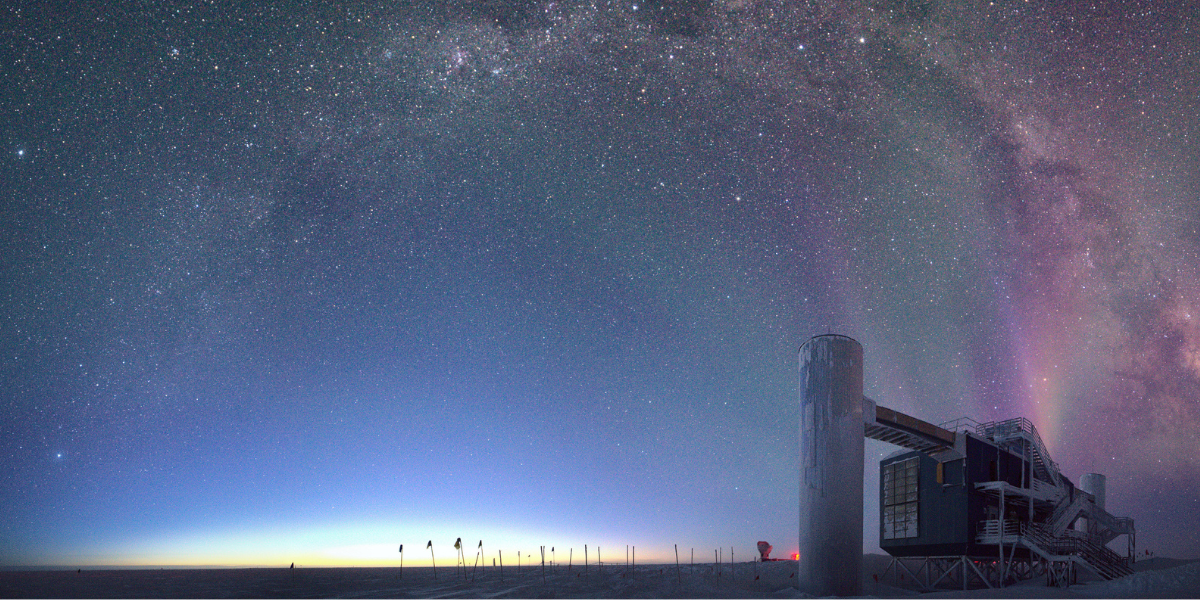
BlogBasics How AI Helped to Spot Neutrinos from our Galaxy Jana Konrad, 09. July 2025 The IceCube Neutrino Observatory could finally detect neutrinos from the Milky Way. That was possible thanks to new AI tools, which enabled a more accurate analysis of the observed events. ...
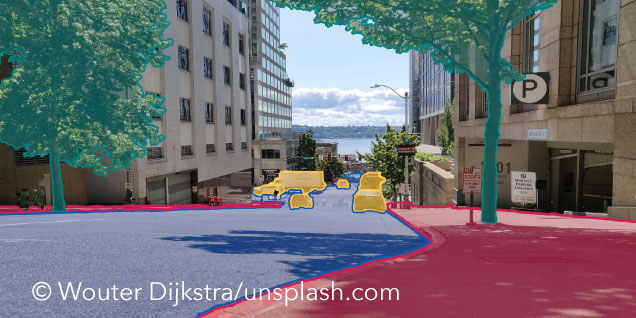
BlogBasics Object Detection: How machines recognize objects Luise Weickhmann, Maximilian Otten, 31. May 2023 With the help of object detection methods, machines can be trained to recognize and locate objects. In this blog post, we provide an overview of this area of computer vision....
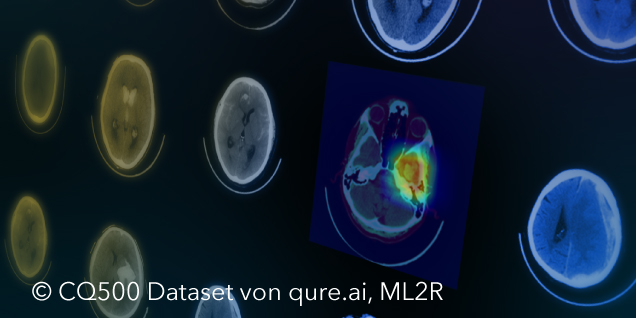
BlogApplication AI in radiology – Classifying and explaining hemorrhagic strokes with deep learning Rebekka Görge, 27. July 2022 If a stroke occurs, rapid intervention is required. Deep learning classification could support doctors. However, in safety-critical areas such as medicine, AI predictions must be transparent....
BlogApplication An Approach to Granular Testing of Deep Neural Networks Sujan Sai Gannamaneni, 01. June 2022 Establishing rigorous testing and certification techniques is essential before deploying new technologies like Deep Learning (DL) in safety-critical applications. We propose a testing approach that could identify weaknesses in DL models....
BlogApplication ML in logistics: How can CNNs make automation in bin picking more efficient? Anas Gouda, 13. April 2022 The scope of application of convolutional neural networks (CNNs) in industry and logistics is currently still limited, although they can help to efficiently automate various tasks. Various application methods can promote their use....
BlogBasics Computer vision: How do machines learn to see? Christian Pionzewski, 09. March 2022 Machine Learning enables the development of powerful image recognition systems (computer vision) with which information can be automatically recognized and extracted from images and videos. Deep learning methods in particular have an advantage over traditional methods....
BlogApplication Searching for cosmic rays with Artificial Intelligence Dr. Sebastian Buschjäger, 03. February 2021 Gamma radiation provides clues to processes in space. For the first time, an interdisciplinary team of computer science and astrophysics researchers at TU Dortmund University has succeeded in analyzing gamma radiation in real time using a telescope....