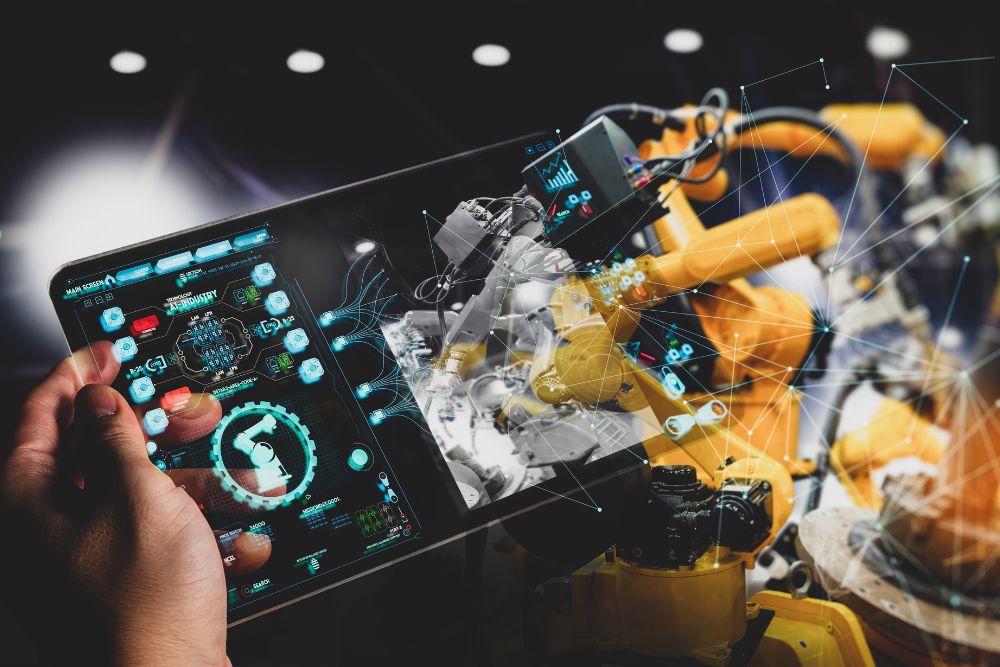
The German federal government is providing €500,000 to develop the concept for the planned “Robo-Hub Logistics HILA”. The proposal jointly submitted by the four partner institutions of the Lamarr Institute is one of seven projects selected in the nationwide competition “Innovation Laboratories for AI-Based Robotics”. Led by the Fraunhofer Institute for Material Flow and Logistics IML, the consortium will develop a concept for an innovation laboratory where researchers and companies can test robots for use in logistics. The focus is on tasks that have so far been difficult to automate because of varying goods and working conditions.
Companies to test robotics before investing
Processing returns, order picking or unloading trucks: these tasks require handling objects of different shapes and responding to changing situations. Existing automation solutions work well mainly with uniform goods and stable processes. HILA targets these variable requirements and focuses on intralogistics, meaning the flow of materials within a company, including its outdoor areas. Flexible multipurpose robots, including humanoid systems with a human-like body, are to be tested under realistic conditions. Small and medium-sized enterprises in particular should be able to assess how reliably such systems work, whether they fit into existing processes and when their use becomes economically viable before making an investment.
Four Lamarr partners connect AI research with logistics applications
The consortium comprises TU Dortmund University, the University of Bonn and the Fraunhofer Institute for Material Flow and Logistics IML and the Fraunhofer for Intelligent Analysis and Information Systems IAIS, which jointly constitute the Lamarr Institute for Machine Learning and Artificial Intelligence. HILA builds on their collaboration in AI research and connects it with robotics and real-world logistics operations. A central challenge is the interplay between perception, learning and action: a robot must, for example, be able to recognise an object, select a suitable grasp and adjust its movement if the object slips. When moving from the warehouse to the yard, it must also cope with changing light and weather conditions. The planned hub will investigate how these capabilities can work together reliably in day-to-day operations.
The concept phase begins on 1 December 2026 and runs until 31 August 2027. During these nine months, the consortium will determine how the infrastructure, collaboration with companies and testing opportunities should be designed. This also includes safety requirements and a viable operating model. The federal government will then decide which of the selected Robo-Hubs will actually be established and funded.