
How can works of art that have been broken into thousands of fragments for almost two millennia be restored? The European research project RePAIR – Reconstructing the Past combines robotics, AI, and computer vision to reconstruct ancient frescoes from Pompeii using an AI-supported method that digitally analyzes the fragments, identifies matching pieces, and reassembles them using a sensitive two-armed robot. Researchers at the University of Bonn and the Lamarr Institute of Mashine Learning and Artificial Intelligence developed planning methods for bimanual robot movement that enable the system to safely grasp the extremely fragile fragments and place them with millimeter precision at the position calculated by the AI.
What began in the laboratory has now been tested in archaeological practice for the first time worldwide: in Pompeii, significant fresco ensembles have been physically reconstructed – a milestone for restoration technology. “RePAIR has impressively demonstrated how robotics, AI, and archaeology can work together. With our work on system integration and motion planning, we have been able to bring Lamarr research into a field where intelligent robotic systems can make an important contribution to the preservation of cultural heritage in the future,” explains Prof. Dr. Maren Bennewitz.
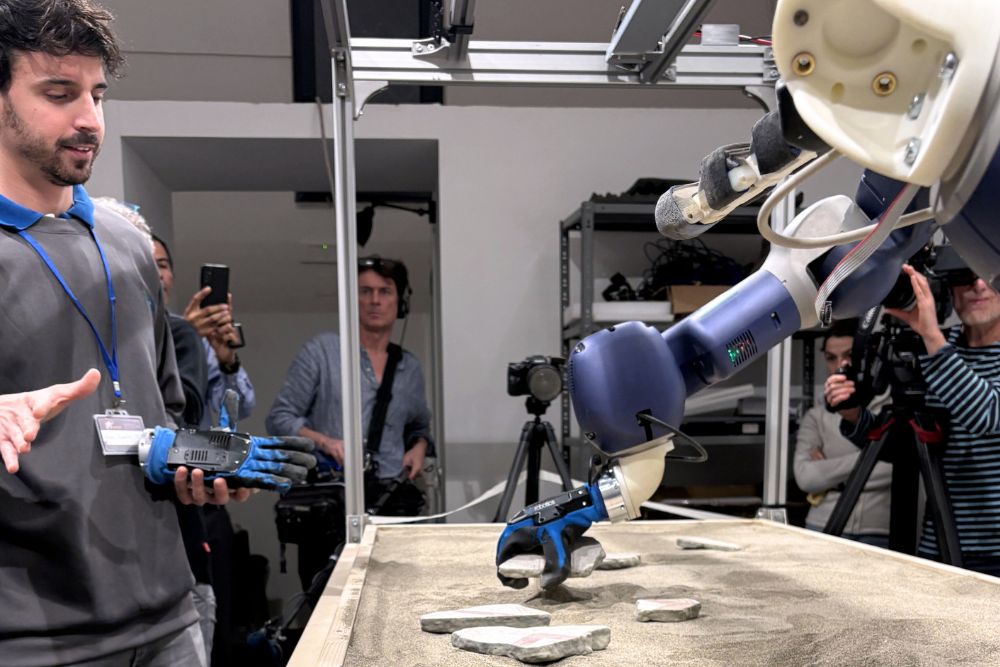
The scientific significance extends far beyond Pompeii. Millions of fragments are stored in museums and depots around the world, and their manual reconstruction is often considered impossible. RePAIR shows that modern technology can overcome these limitations: the combination of algorithmic pattern recognition and robotic precision unlocks cultural assets that were previously considered irreparable. The project is thus setting a new standard for the use of AI and robotics in cultural heritage—and opening up ways to make lost history visible again.