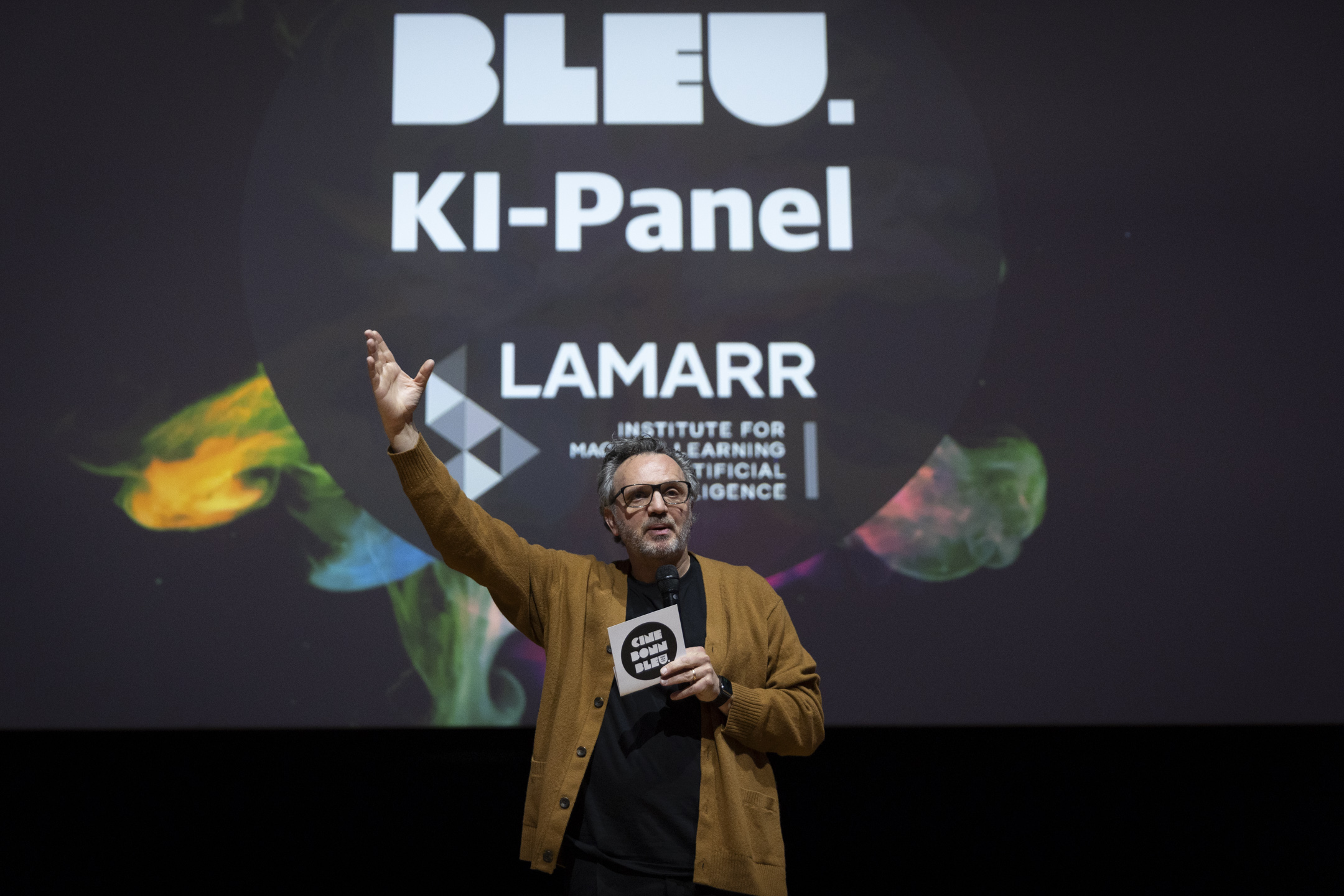
What turns generated images into cinematic art? The ability to produce convincing images does not, in itself, answer the question of what story they tell or what artistic stance they express. At Cine Bonn Bleu, the work behind the results therefore took centre stage: How do a distinctive artistic voice and an intended effect emerge when AI is part of the creative process? On 7 November, the Lamarr Institute and Cine Bonn Bleu jointly hosted a programme of short talks, interactive stations and discussion at the Bundeskunsthalle Bonn. It formed part of the international short film festival, which brings together diverse forms of cinematic expression and opportunities to engage with filmmakers.
Creative Intent Sets the Standard
An entirely AI-generated visual world can serve a human storytelling intent. One example is “The Ambassador” by film editor and producer Daniel Scheuch, who focuses on emotional closeness to his characters. His guiding principle, “Made by Humans. With the Power of AI”, describes a stance also reflected in other contributions: New tools expand creative possibilities, but still require selection, judgement and a sense of what a work should achieve. In director Florian Meimberg’s “Lady in White”, expertise in costume, props and location scouting informs the development of historically accurate imagery. Hybrid production thus combines not only live-action and generated footage, but also technological methods and traditional filmmaking craft.
Artist Manuela Klauser’s perspective illustrated how open-ended the outcome of such a process can be. Working under the name sheisinblack.art, she develops a visual language spanning experimental films, music videos, stage visuals and digital art. Unexpected AI outputs can provide inspiration, while in a precisely planned scene they may require correction. The discussion of chance made this distinction tangible: What matters is whether a result serves the creative intent or opens up a new direction that someone consciously chooses to pursue. Klauser’s work shows how a distinctive voice can be developed with AI as well. Her starting point is her own visual ideas, which she gives visible form with the help of these tools.
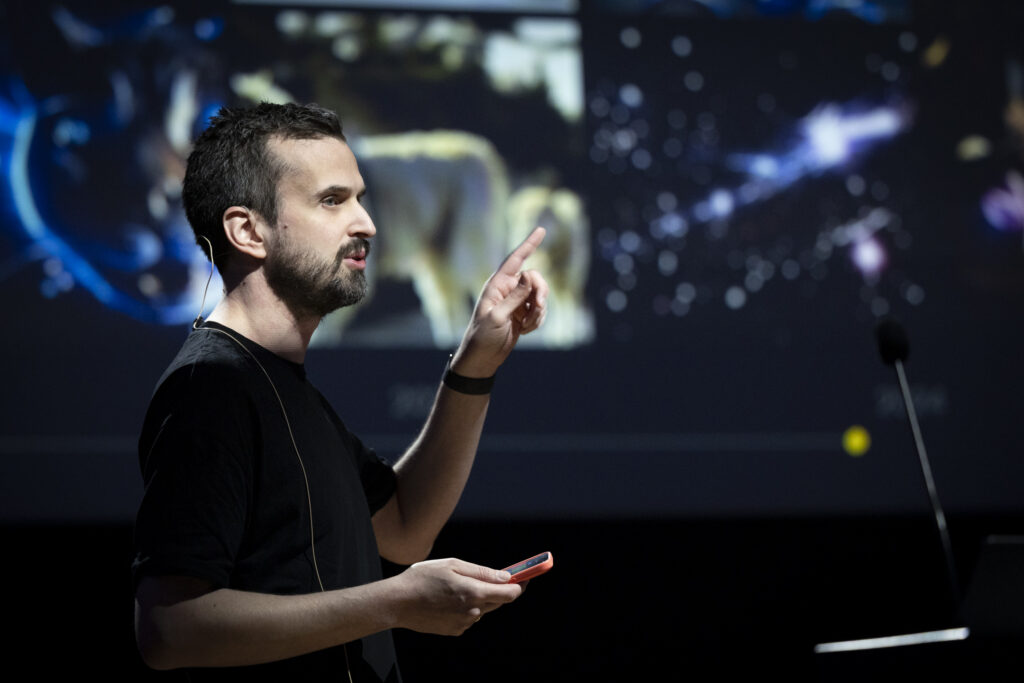
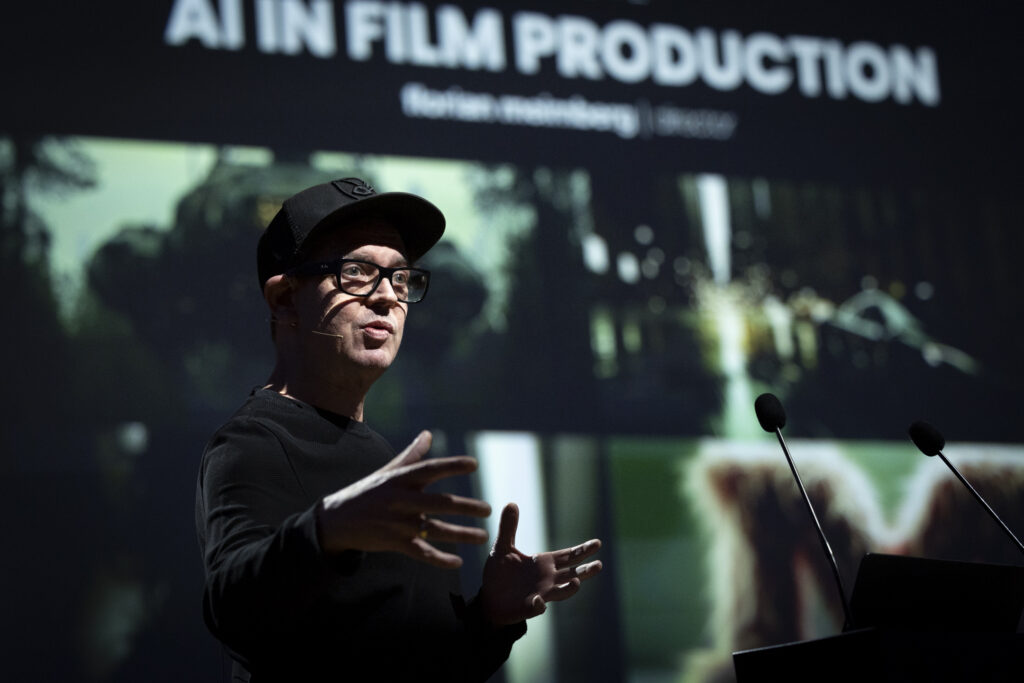
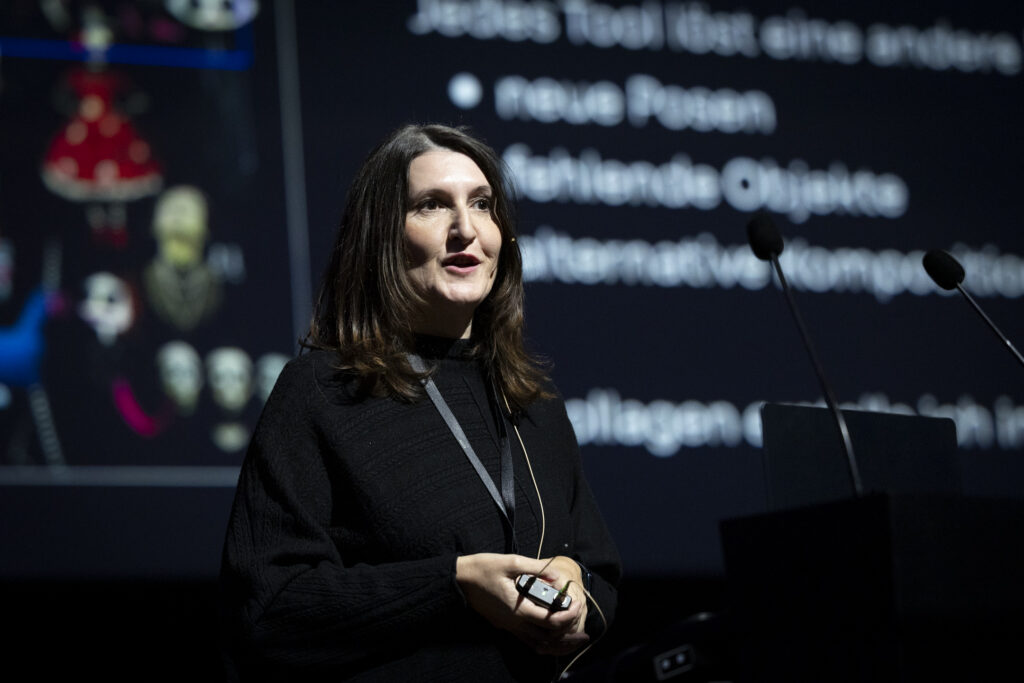
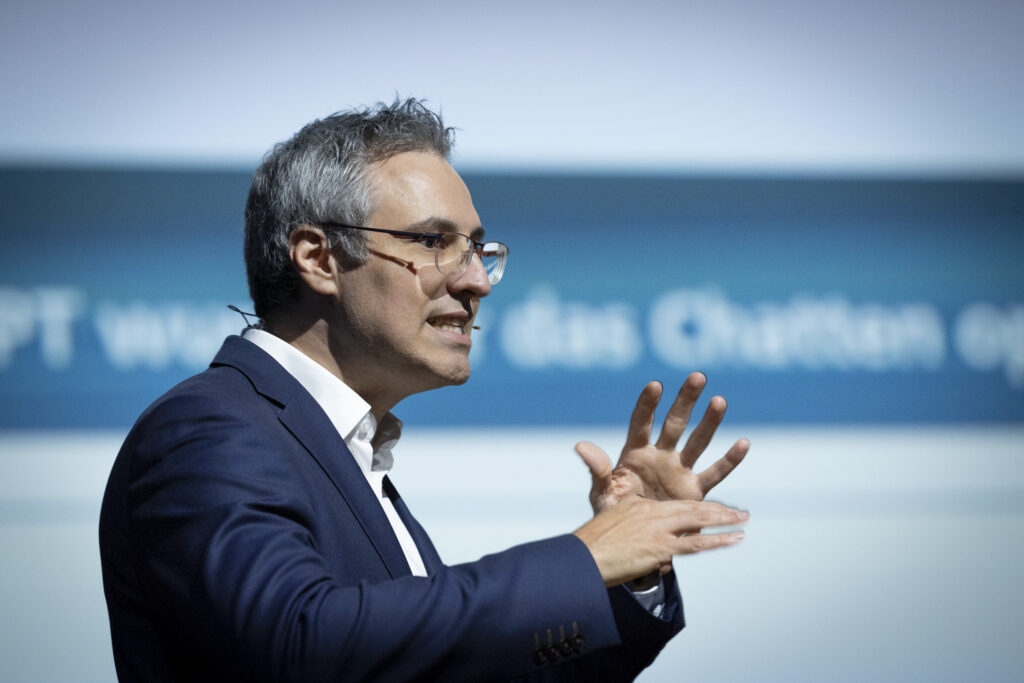
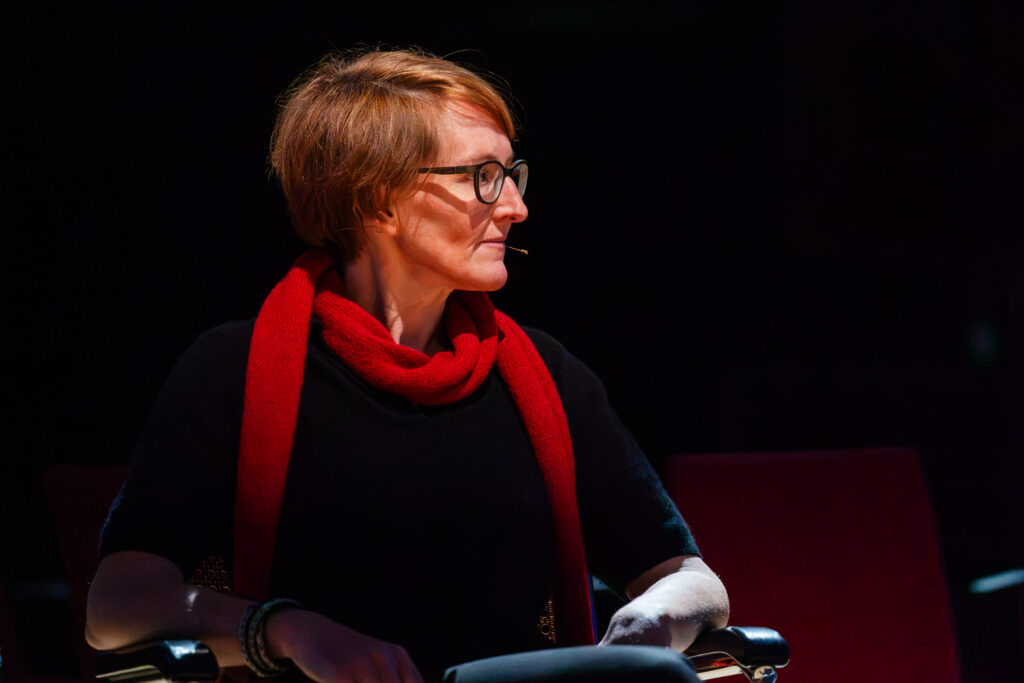
© Volker Essler & Cine Bonn Bleu
AI also shapes the work before images take form
The research perspective extended this question to include work with existing material. Dr Christoph Schmidt, Head of Business Area “AI4Media” at Fraunhofer Institute for Analysis and Information Systems IAIS, explained how AI agents can break research tasks down into steps and search video, audio and text collections. Using the demonstrator, visitors could explore video archive conversationally, with relevant clips made accessible together with their sources. Such systems change which material is found for a story and suggested for editing. They therefore influence creative processes even where no new images are generated. Schmidt summed up the essential distinction: “AI knows what is plausible. Only humans know what is meant.”
This has implications for skills and responsibility. In the panel moderated by Anna Höpfner, Scheuch, Meimberg and Klauser joined Tatjana Wittig, Director/Chapter Lead AI at Deutsche Telekom, to discuss changing tasks and professional uncertainty. The concrete works gave practical meaning to the idea that humans tell stories: People establish the perspective, assess suggestions and decide what effect they want to achieve. How these decisions remain in human hands as production conditions change connects the questions of creative practice with those of research. As Scheuch put it: “Where humans and AI meet, new worlds can emerge. If we understand AI as a tool. Not as a cure-all.”
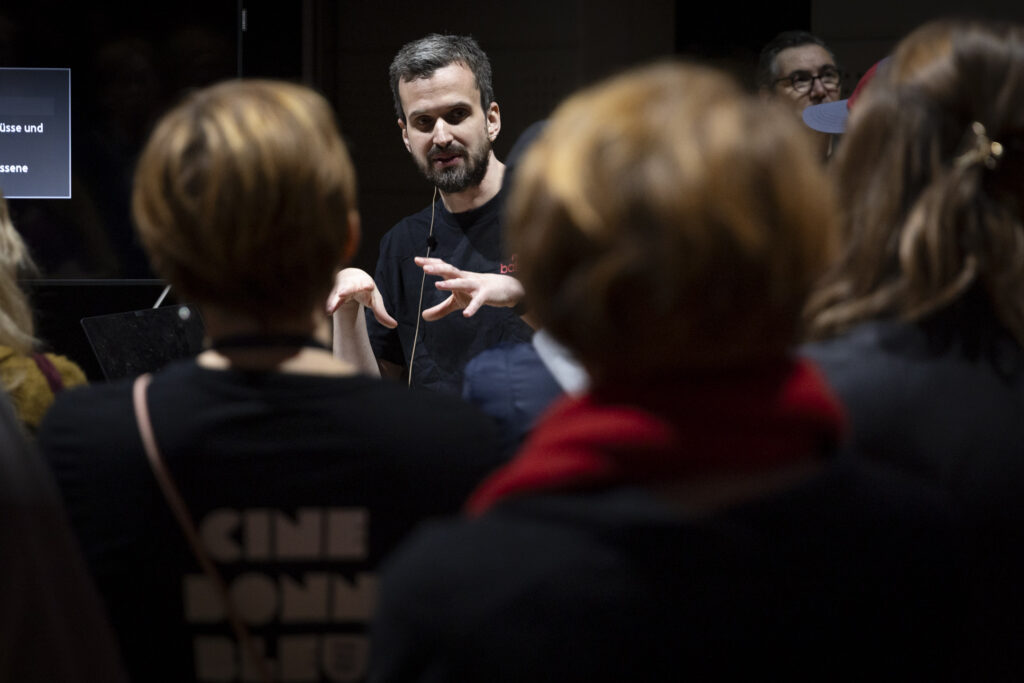
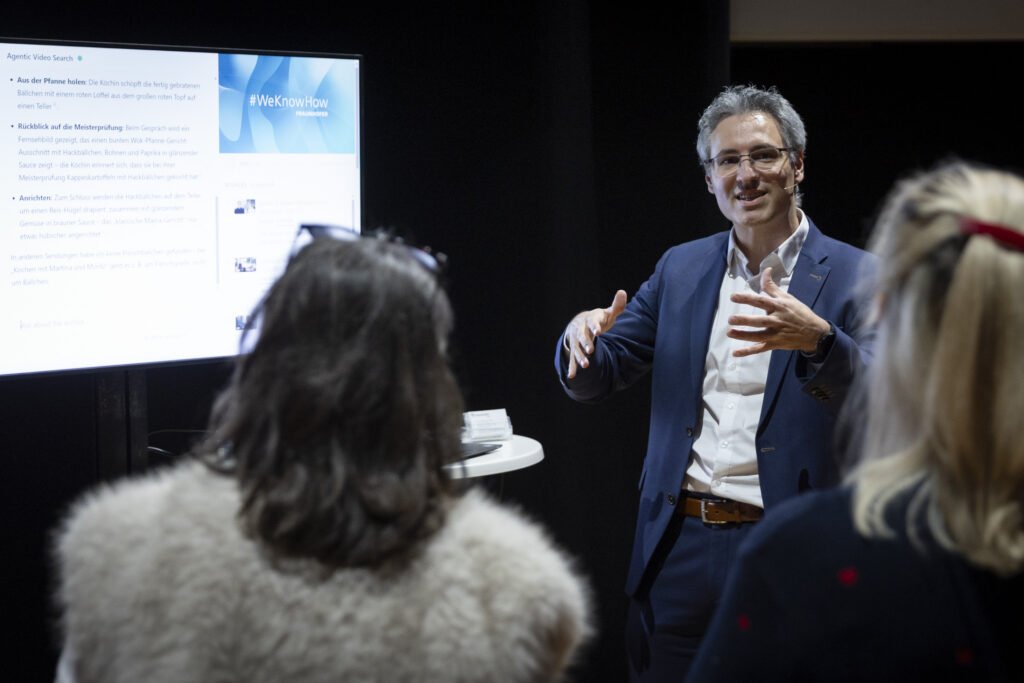
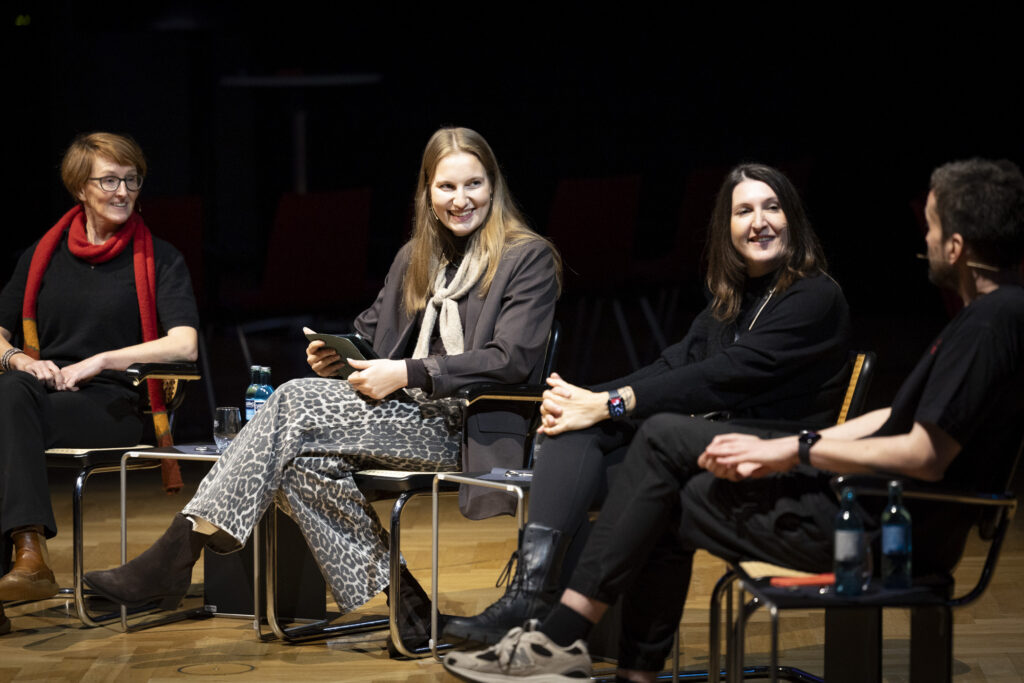
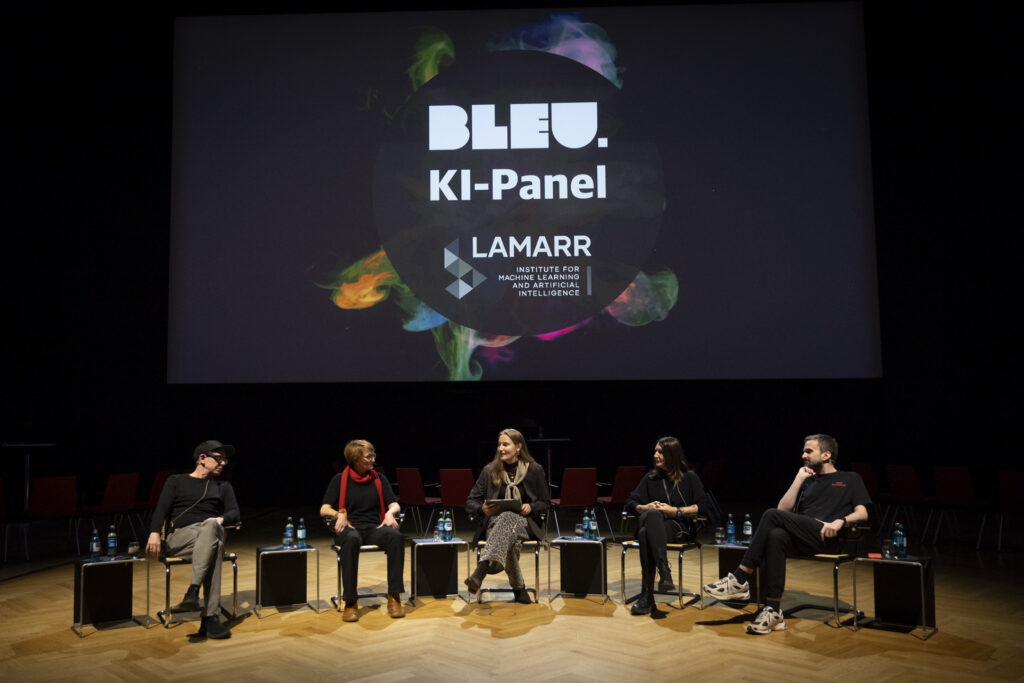
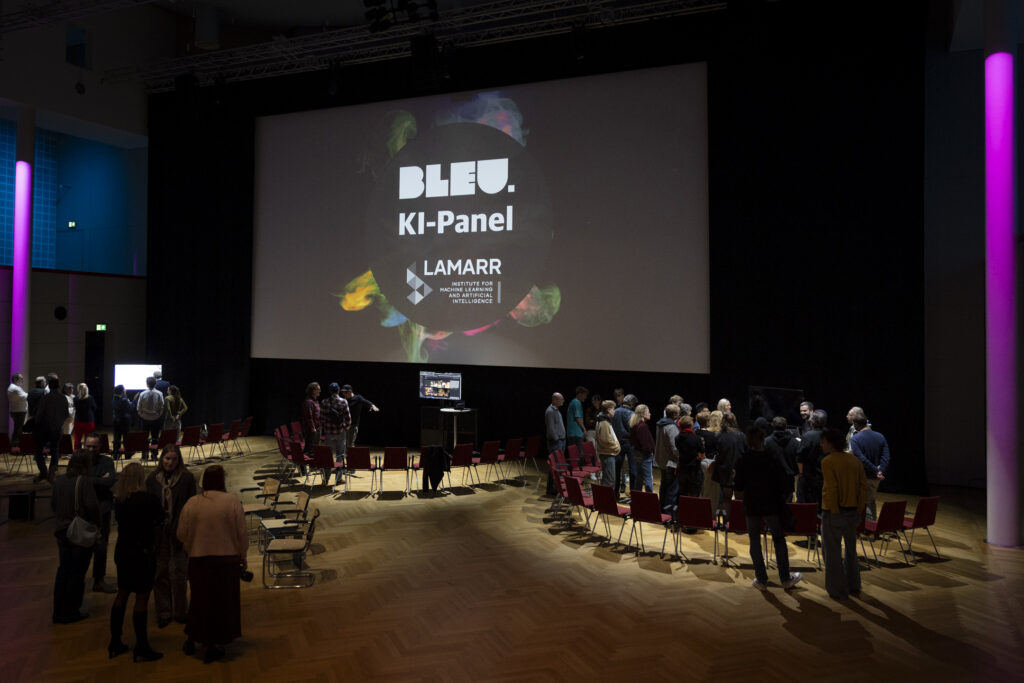
BLEU AI panel in cooperation with the Lamarr Institute at the Cine Bonn Bleu Short Film Festival, held at the Bundeskunsthalle in Bonn. © Volker Essler & Cine Bonn Bleu