BlogResearch The FRIES Trust Score: How AI Trustworthiness Can Be Quantified Dr. Jérôme Rutinowski, 11. June 2025 How can the trustworthiness of AI models be measured objectively and systematically? The FRIES Trust Score offers a structured approach to enhance transparency and comparability in models and datasets....
BlogBasics Conscious use of Large Language Models: How to avoid biases? Dr. Anna Lena Emonds, Julia Kaballo, 17. July 2024 Bias in training data of large language models is a problem. Learn to recognize and minimize the effects of unconscious biases to achieve fairer and more diverse results. ...
BlogBasics Ethical Use of Training Data: Ensuring Fairness and Data Protection in AI Thomas Dethmann, Jannis Spiekermann, 03. July 2024 Discover how ethical use of training data minimizes bias, ensures data protection, and fosters trust in Artificial Intelligence....
BlogBasics Automatic classification of a publication network using a Graph Attention Network Maximilian Sauerzapf, 19. May 2023 Social networks are omnipresent these days. But how can information be extracted from them with the help of neural networks? To answer this question, we present the Graph Attention Network....
BlogResearch Sum-Product Networks – A new deep architecture for Machine Learning Alexander Becker, 12. July 2022 Clear semantics with reference to training data, learning of structure and parameters, efficient inference and versatile applicability: this is what Sum-Product Networks combine - a new type of model architecture for Machine Learning....
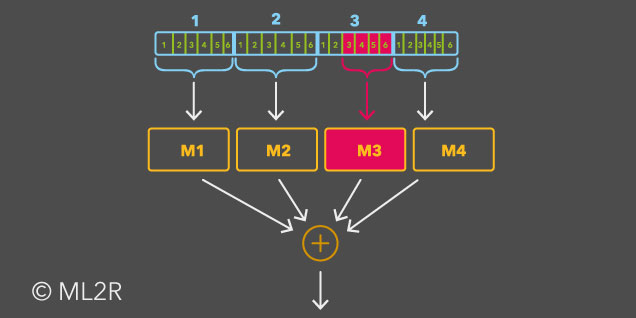
BlogBasics I forgot to remember to forget: Forgetting as a new requirement for AI Alexander Becker, 29. September 2021 The right to be forgotten came into force with the GDPR. In Machine Learning, targeted forgetting not only opens up aspects of data security and privacy, but also potential for the applicability and further development of learning models....
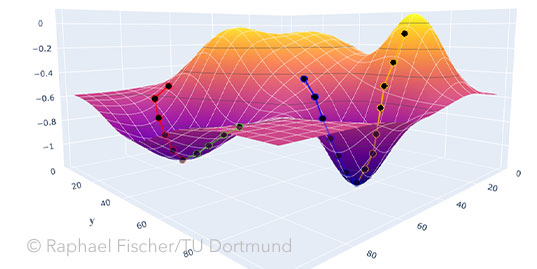
BlogBasics Optimization in Machine Learning Dr. Raphael Fischer, 13. January 2021 Optimization is a key component of Machine Learning that allows models to be trained based on data. It usually works in the background but is especially important for highly complex learning problems and difficult data....