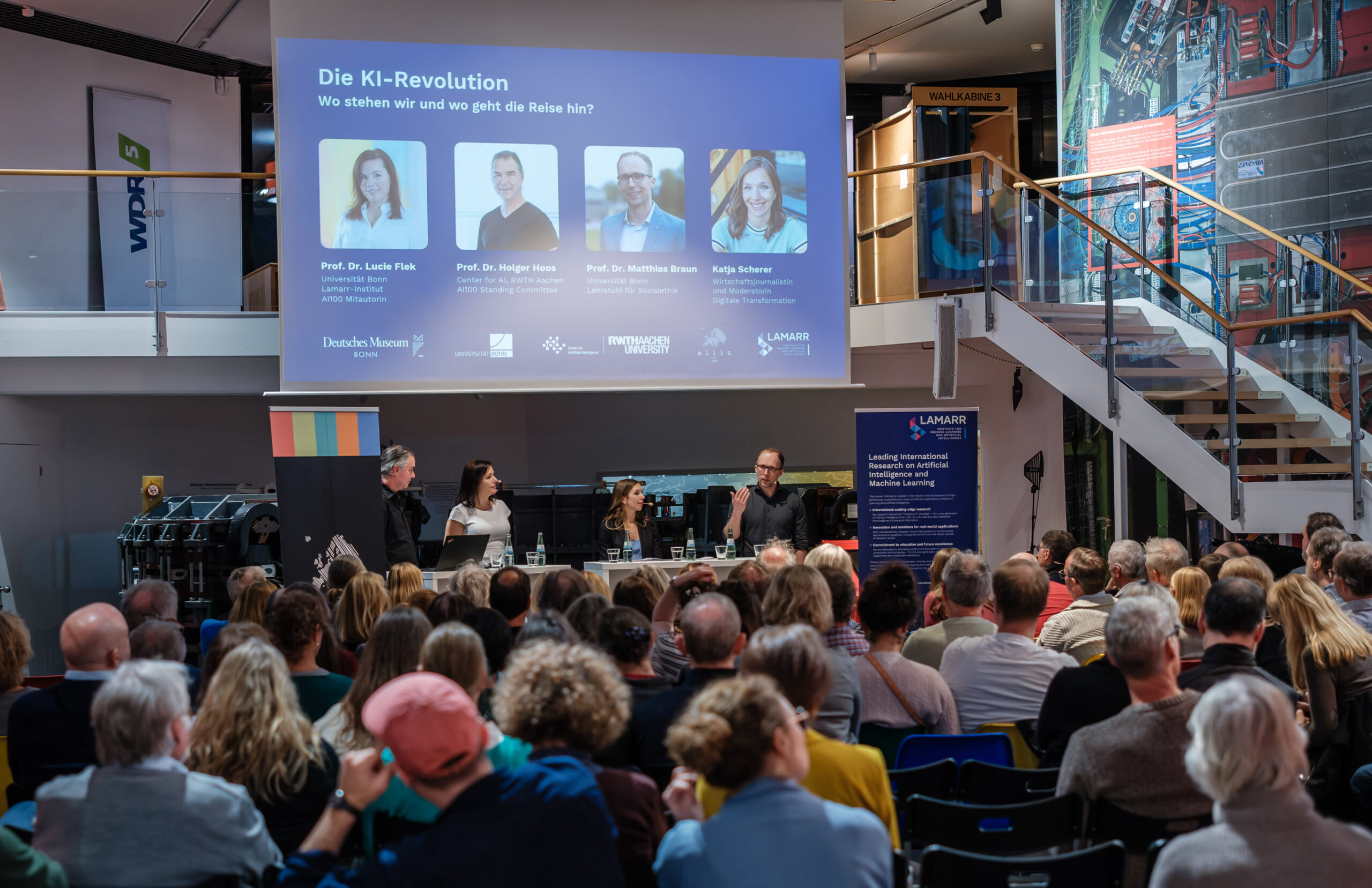
Has Europe already fallen behind in artificial intelligence? This question from the audience sparked a discussion about Europe’s room for manoeuvre at the sold-out AI100 evening on 19 November at the Deutsches Museum Bonn. The discussion focused on two prerequisites for Europe to help shape the development of AI: expanding its own capabilities for developing powerful AI and aligning its use with societal goals. The basis for the evening was the new AI100 Report, co-authored by Bonn AI researcher Prof. Dr. Lucie Flek.
Europe’s own AI expertise needs European infrastructure
Flek, professor at the University of Bonn and the Lamarr Institute, rejected the notion that Europe lacks scientific expertise. She argued that Europe should not limit itself to smaller, specialised models when developing its own AI. Working on large models is also important, she said, in order to understand how they are developed and to apply the knowledge gained to domain-specific systems. This requires an infrastructure of computing capacity and AI models that is conceived at a European level and built jointly.
The report shows how big this task is: while developing a leading AI model cost around five million US dollars in 2021, today it costs around 500 million per training run, on computing facilities worth tens of billions. As a result, the development of the most powerful systems is concentrated among a small number of actors in the US and China. Freely available open models now lag only three to six months behind the leading models. However, they come predominantly from China and the US – anyone who builds on them remains dependent on future releases and inherits the decisions of their developers.
Prof. Dr. Holger Hoos of RWTH Aachen University, a member of the AI100 Standing Committee, noted that research is also feeling this shift: a growing share of AI talent is moving into industry. The report confirms this: in the US and Canada, 21 percent of AI PhD graduates went into industry in 2004; by 2020, the figure was almost 70 percent. For existing knowledge in Europe to lead to its own developments, both are therefore needed: sufficient computing capacity and conditions that keep talent in research.
Fundamental rights provide orientation for the use of AI
Prof. Dr. Matthias Braun, holder of the Chair of Social Ethics at the University of Bonn, complemented the technical perspective by addressing responsibility for decisions about development and deployment. The fact that the public has so far had little influence on how AI is shaped is not an inevitable side effect, he argued. Human dignity, fundamental rights and democratic processes provide standards against which the use of AI must be measured. Europe can confidently set conditions, he said: its economic area is relevant for international technology companies and therefore offers opportunities to set rules effectively.
The report supports this view. While the US and China compete for technological leadership, so-called middle powers are pursuing different strategies to secure their own room for manoeuvre, thereby looking for ways to agree on concrete rules. In many places the public wants stronger, safety-oriented regulation. With the AI Act, the EU has created the first comprehensive, binding AI law, even though key requirements for high-risk systems have since been postponed until the end of 2027.
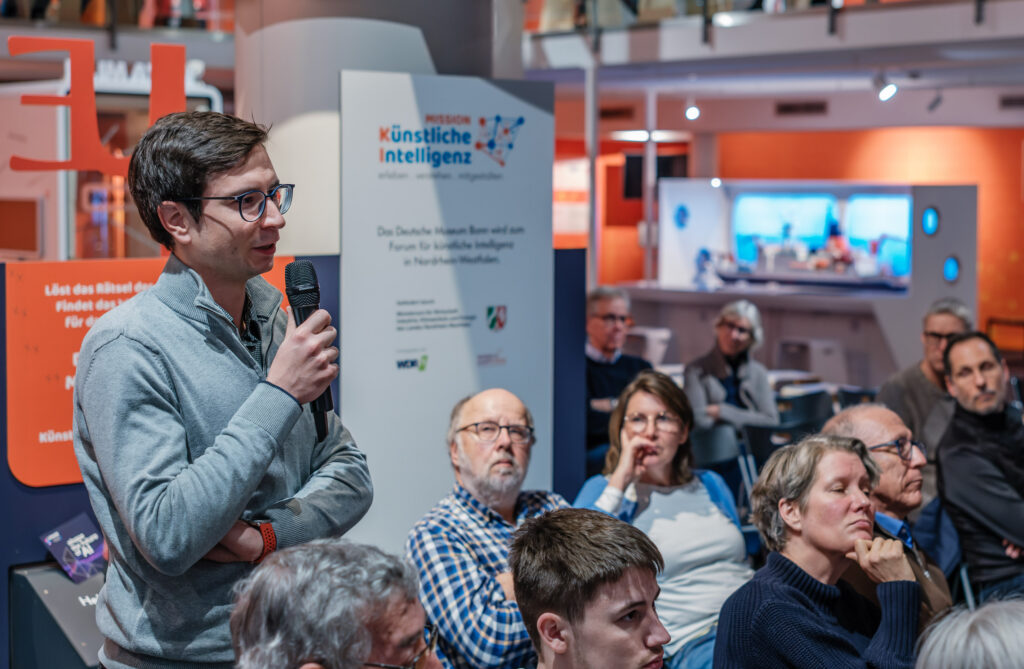
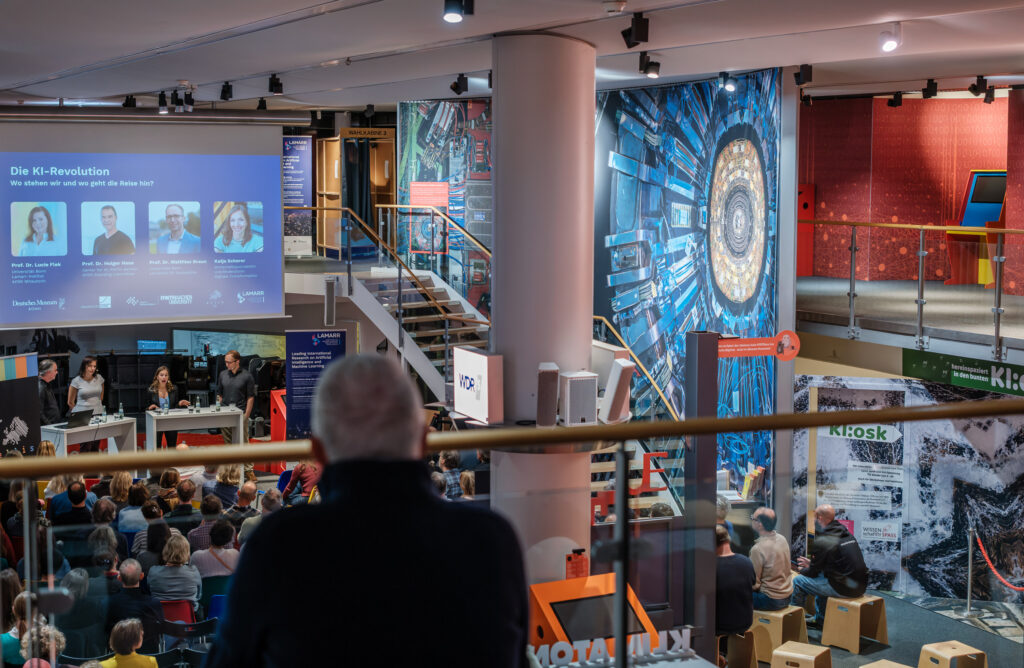
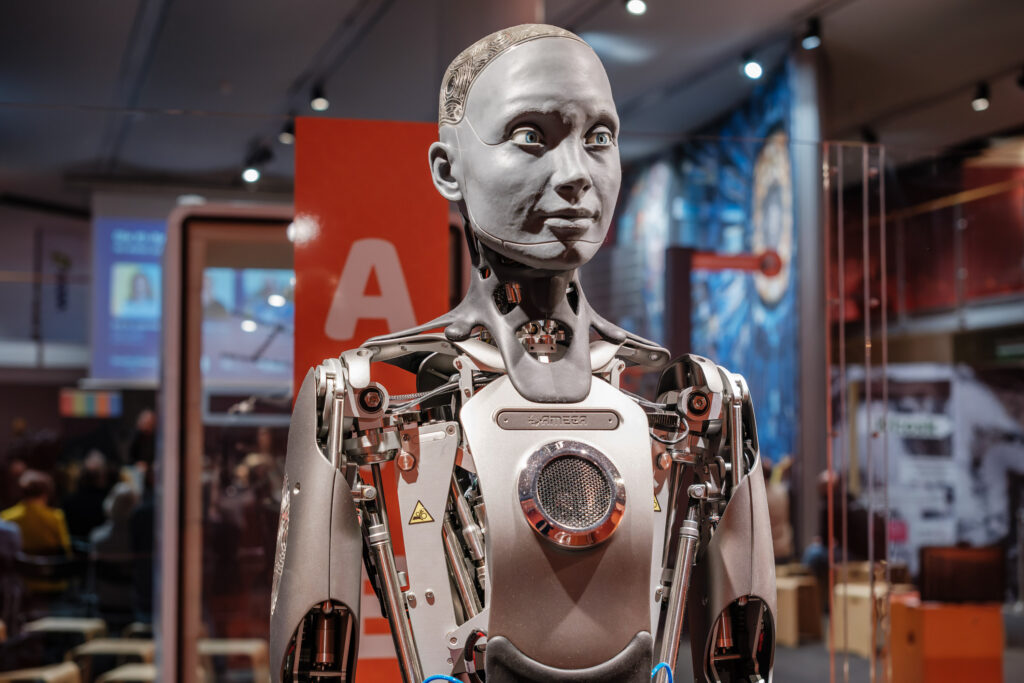
Impressions from the AI100 evening at the Deutsches Museum Bonn © Lamarr Institute | Adrian Kopper
Resources: How much water and energy should AI be allowed to use?
Another question from the audience showed how concrete these questions of governance are: if data centres use drinking water for cooling, who has priority when water becomes scarce? The report describes water consumption as a complex problem. What matters is where the water comes from: where groundwater is already scarce, data centres can have significant consequences. At the same time, only a few data centres are currently required to disclose their electricity and water consumption. The report calls on policymakers to weigh what level of resource consumption is appropriate for AI compared to other uses. An example from North Rhine-Westphalia shows that there is another way: the European supercomputer JUPITER in Jülich runs entirely on renewable energy and, according to the report, is 20 to 40 times more efficient than typical AI data centres.
Not left behind, but challenged
The evening gave a nuanced answer to the initial question: Europe does not lack knowledge. But turning it into its own development capabilities requires shared infrastructure, responsible use of resources and the will to enforce its own standards. The report itself emphasises how quickly the situation is changing: hardly anyone foresaw five years ago where AI stands today, and the next five years are likely to be just as surprising.
The evening combined insights into research with questions about how it should be shaped by society. Following an opening by Prof. Dr. Stefan Wrobel, Co-Director of the Lamarr Institute, Hoos, as a member of the AI100 Standing Committee, outlined the mission of the long-term study. Flek presented findings, complemented by video contributions from Prof. Dr. Iryna Gurevych and Prof. Dr. Iyad Rahwan; business journalist Katja Scherer moderated the subsequent discussion with Flek, Hoos, Braun and the audience. The event was jointly organised by the Lamarr Institute and RWTH Aachen University, the University of Bonn, the ELLIS Unit NRW and the Deutsches Museum Bonn.
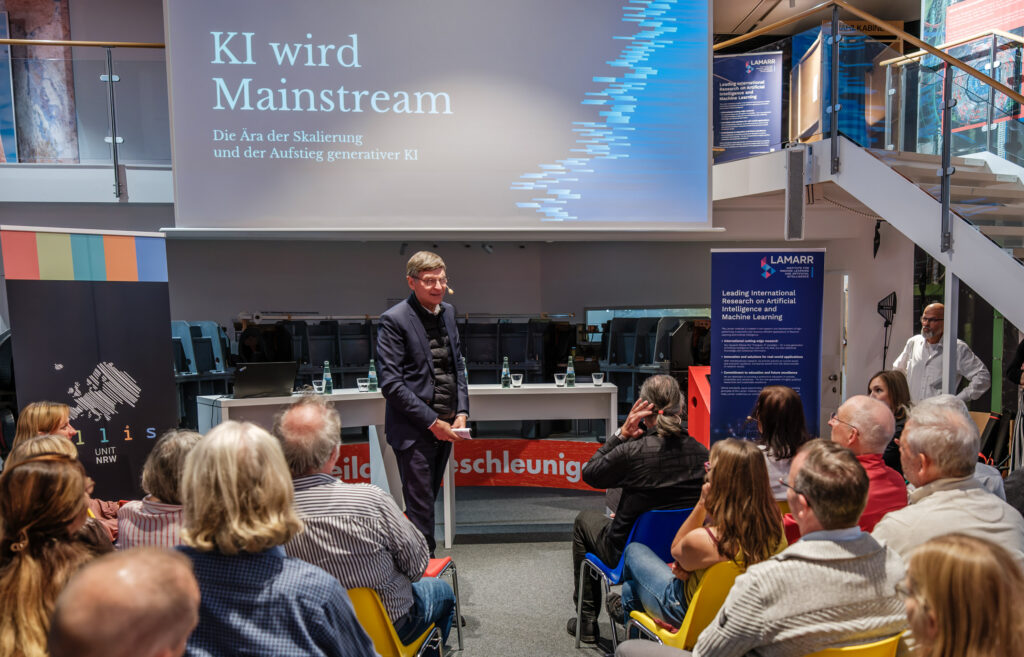
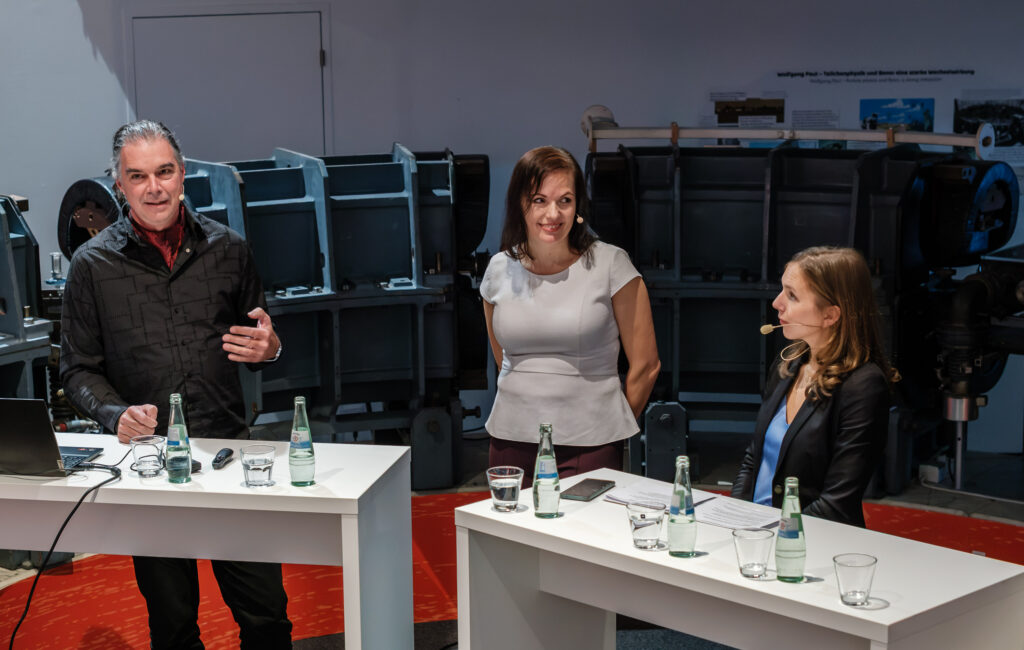
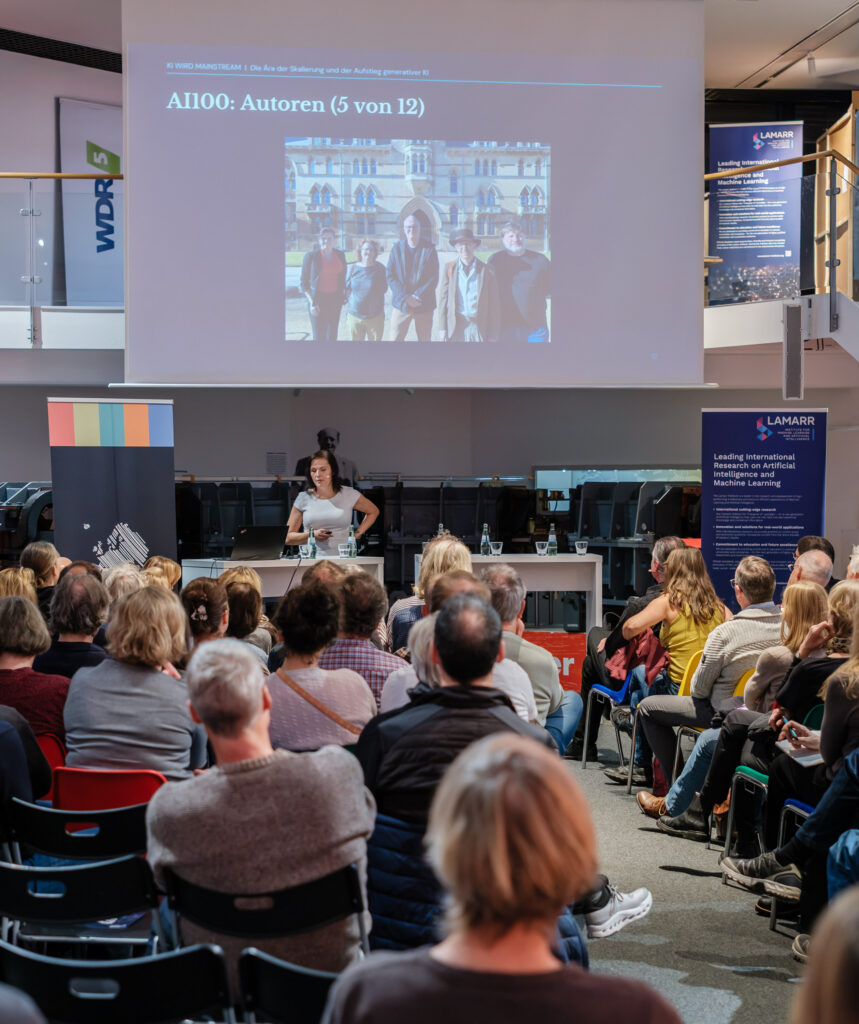
Impressions from the AI100 evening at the Deutsches Museum Bonn © Lamarr Institute | Adrian Kopper